


.png)
What If I Told You You’re Washing Your Body With Detergent and Not Soap?

I used to think soap was just… well… soap. You buy it at the store, you wash up with it, it foams up a ton, has enticing scents, end of story. Just like I used to shrug at food labels until I really understood what was behind them, I didn’t question what was in a bar or bottle of body wash — until I started making my own tallow soap and paying closer attention to what we put on our skin every single day.
Here’s the thing: a lot of products we think of as soap — especially liquid body wash and even some bar “beauty bars” — are not soap at all. They’re detergents. And while detergents are great for dishes or laundry, they behave very differently from traditional soap made from real fats.
What Is “True Soap”?
True soap is simple.
It’s made by combining fat or oil — like beef tallow — with lye (sodium hydroxide). This causes a reaction called saponification, which turns those fats into soap and naturally occurring glycerin. That’s it. No shortcuts. No fillers. Just ingredients with a purpose.
That’s how traditional soap has been made for generations, and it’s how I make my tallow soap today.

So What Are You Actually Washing With?
Most liquid body washes and many popular cleansing bars rely on synthetic detergents to do the cleaning. Ingredients that I personally have a hard time pronouncing, like:
Sodium Lauryl Sulfate (SLS)
Sodium Laureth Sulfate (SLES)
Cocamidopropyl Betaine
These ingredients are designed to foam easily, stay stable in liquid form, and rinse clean — all great qualities for mass production and long shelf life. But they’re not soap, and they don’t interact with your skin the same way real soap does.
Detergents are very effective at removing oils. The problem is that they don’t know the difference between dirt and the natural oils your skin needs to stay healthy.

Why That Matters for Your Skin
Your skin has a natural protective barrier made of oils and fatty acids. This barrier helps keep moisture in and irritants out.
Detergent-based cleansers can strip away those natural oils, sometimes leaving skin feeling tight, dry, or irritated — especially with daily use. Over time, this can lead to a cycle of dryness, sensitivity, and dependence on lotion just to feel comfortable.
Tallow soap cleans differently. The fatty acids in tallow closely resemble the fats found in human skin, which makes it easier for the skin to tolerate and use. Instead of feeling stripped, skin is left balanced and nourished.
Fragrances & Dyes: What Finally Made Me Pay Attention
This part is personal for me.
After dealing with autoimmune issues, I was forced to slow down and really examine everything I was putting in and on my body. Food was an obvious place to start, but it didn’t take long to realize that skincare deserved the same level of care.
Most store-bought soaps and body washes contain synthetic fragrance and artificial dyes. On an ingredient label, fragrance is often listed simply as “fragrance” or “parfum,” but that single word can represent dozens — sometimes hundreds — of undisclosed chemical compounds. These formulas are considered trade secrets, which means companies aren’t required to tell you exactly what’s in them.
Fragrance is also one of the most common triggers for skin irritation and sensitivity, especially for those already dealing with autoimmune or inflammatory conditions. Even people who have tolerated fragranced products for years can suddenly become reactive.
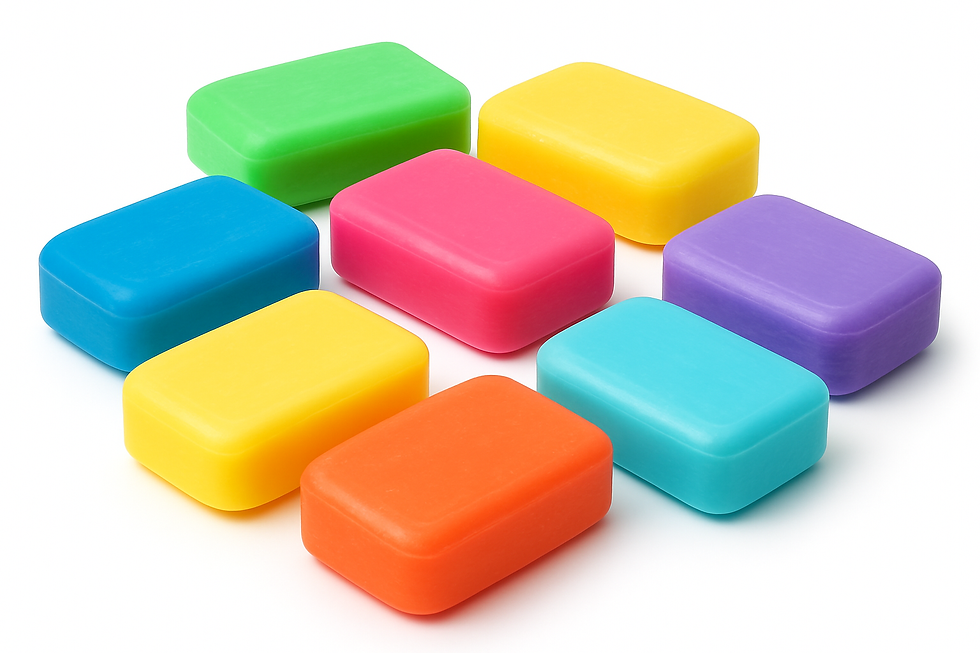
Artificial dyes serve no purpose for your skin. They’re added purely for appearance and branding — to make products stand out on a shelf. For sensitive or reactive skin, dyes are just another unnecessary burden.
That’s why my soaps are different. I only use essential oils for scent, and I never use dyes — ever. The natural color of the soap comes from the ingredients themselves, the way traditional soap has always been made.

Why Manufacturers Choose Detergents
Detergents make sense for large companies. They’re consistent, inexpensive, and easy to formulate. They foam well, work in hard water, and allow for bright colors and long-lasting scents.
But those priorities are about efficiency and shelf life — not necessarily what’s best for your skin.
A Simpler Way to Clean
If you’ve ever wondered why your skin feels tight after a shower or why lotion never seems to be enough, your daily wash might be part of the story.
Traditional tallow soap is simple, nourishing, and time-tested. It cleans without stripping, supports the skin’s natural barrier, and avoids unnecessary additives.
All of my soaps are made in small batches in my kitchen. I source my ingredients locally whenever possible, and within our country when I can. I never set out to be a soap maker. As with everything in my life, I try to follow God’s plan for me — and somehow, for some reason, this is the path I’m walking right now.
My hope is that sharing what I’ve learned about simple, natural products versus store-bought ones can help you make more informed choices in your everyday life.


Comments